“Allow Me to be The Lead” Letter to The University of Iowa

Dear University of Iowa Adminstrators,

My only semester at The University of Iowa was made cut-short due to a “setback” I’ll help explain away in this letter; firstly, thank you for allowing me this opportunity to tell you about myself, my current circumstances, and my goals & ambitions as a student & individual. As it stands, it is the school of my dreams!

I was approved a medical withdrawal from the Spring (2021) semester, during which working from home proved unbearably not in my favor (not how I feel now that I’ve set up a workstation that is my ideal place to be in general). As you may recall, the first wave of the Covid pandemic hit around that time, and I just so happened to be navigating through the terms and conditions of a contract I had signed with the CIA as of Feb., 2020 (right before the pandemic) but had no choice but to uphold, at that time, (thus by not earning credits, I was making good on my progress with The Agency; despite how that may seem to the university, please accept my apologies for not me showing more proof on this part of this matter).

I’m sorry that my GPA had a bit of a deterioration after that point, during the Spring of 2020 it was on its way upward as I had done so well in college that I de facto had actually peaked in life. Meaning, it was now or never for the agencies who had heard things about my prodiginous ways growing up; my mental faculties and intellectual security had peaked as an engineering mind who has made many mathematical breakthroughs since. But, so long as you do not ask that I hurry up and graduate and leave the school “willy-nilly” I have decided as of today, that I will serve you–I am very capable and motivated, highly motivated to improve this low GPA currently held with the University–But, even more important, I’m 100% capable of up-holding my promise to admissions to raise the school’s recently fallen ranking.

I was accepted to the college of libral arts and sciences in order to publish my highly original and quite cool, applied mathematics, that may be strong enough of a research case-and-point per force premise to do just that.

On a personal level (an insider note): My day to day does not revolve around mental health struggles these days. Thus, I would appreciate your understanding that I have no documentation to share on this front. The only thing that technically may be of some concern is finances, but I’m working on it. I may end up getting monetized on my YouTube channel, where I made good on my goal as a cinema major at the university. I successfully directed (and starred, as the lead) in the film I wrote and produced on my own. The movie is known by most fans as “All Memories Are (Essentially) False!” (2025). It currently has about a thousand views on Recast The Poly Math.–I consider it a masterpiece! So it similarly goes without saying, I’d be very grateful if the school would please truth me again with regards to making good on my promises, please give me this opportunity to prove myself in the field I already spend hours each day creatively applying (that of Applied Mathematics), I simply feel like a bit of a loser when I literally have no reason to leave the house; I even order my groceries over the internet and family is usually able to pick it up.

Ulimately, if the school is okay with me committing to doing a part-time enrollment this upcoming semester, (exactly 2 classes on the same days, about 2 or 3 times a week), I promise I will not only land perfect scores (most of the time), I will also immediately jump into finding someone to review my Mathematical Paradigm called “Ivankovian Recast”–I shall prove my work with Mathematical percesion and effectiveness to the point of certainty, serving to show proof of myself on the most advanced level and to effectively enrich your beautiful university if you only allow me to be a lead, in which both of us are worthy of much acclaim and shall continue consistly moving up!

They Wanted You to Uphold National Security

The Falling U.S. Field Office

A bitter wind whipped across the deserted parking lot of the Stonebridge Federal Complex, once a thriving hub of government operations. Now, the blocky gray structure stood silent, its tall glass windows cracked by time and neglect. This was the Falling U.S. Field Office—dubbed as such by local rumor and, increasingly, by reporters who came to chronicle its decline.

Inside the crumbling walls, a skeleton staff hovered over dusty desks. The overhead lights flickered ominously. Folders piled on every available surface, evidence of once-robust investigations that had fallen by the wayside. The Field Office, originally established decades ago to oversee high-stakes missions throughout the region, was becoming a casualty of relentless budget cuts, shifting priorities, and—some whispered—corrupt deals at higher levels.

Chapter 1: A Gathering Storm

Michael Halpern, the interim director, sat alone in what used to be a conference room. Boxes of archived files lined the walls, and the projector that once hummed with classified briefings now rested in silent disrepair. The few staffers left—like Bethany Tran, the brilliant but overworked intelligence analyst, and Jude Lawson, a scrappy field agent with an innate sense for trouble—walked the halls, shoulders bowed by creeping defeat.

They had once formed a stellar team. They had intercepted dangerous smugglers on rural highways, secured local communities from infiltration, and even foiled a major cyber-attack on the region’s power grid. But that was a distant memory. Now they were left chasing remnants of old cases and dealing with new leads that no other branch wanted to handle. Officially, they still existed to uphold national security. Unofficially, they were the least-funded link in the chain, overshadowed by bigger offices in major cities.

Halpern shuffled through a folder of incident reports. The content was sobering: undisclosed shipments flowing into remote airstrips, suspicious wire transfers from overseas accounts, and small-town data breaches that no one in Washington considered “urgent.” He knew they should be investigating all of it, but the resources just weren’t there.

Chapter 2: Whispers of Betrayal

The first sign of real trouble emerged when Bethany discovered a pattern in the suspicious wire transfers. They all seemed connected to a network of hush-hush businesses rumored to be linked with a powerful senator. The staff had never truly believed the rumor that corruption lay behind their funding slash—but the evidence suggested otherwise. As Bethany dove deeper, she found yet more files tying local politicians to major defense contractors and the repeated funneling away of resources from Stonebridge to more “profitable” offices.

Late one night, after rummaging through logs of archived communications, Bethany’s eyes widened at a coded dispatch that had been flagged months ago but never investigated. Her heart pounded. The message exposed a covert agreement to reduce Stonebridge’s capabilities to mere window dressing. In short, the Field Office had been earmarked to fail—and the highest ranks were either complicit or willfully ignoring the situation.

She rushed to Halpern with the discovery. The aging director sighed as he flipped through the pages, face growing grim. “They set us up,” he muttered. “But they didn’t account for staff who still believe in their duty.”

Chapter 3: Last-Ditch Efforts

Jude, the field agent, insisted they act on the intelligence. Under the flickering fluorescent light of a nearly abandoned office corridor, they planned a discreet mission to confirm the existence of a criminal tie that was siphoning funds from Stonebridge. They would gather enough evidence to blow the scandal wide open.

Halpern, normally cautious, pushed for boldness. “It’s time to show them this office still has teeth. We might be undermanned and overshadowed, but our mission stands.”

Bethany combed through digital footprints while Jude traveled by night to a remote airport rumored to host under-the-table shipments. Devoid of backup and short on time, Jude captured photos of unmarked planes unloading crates. One slip-up, a single security guard who might be on the payroll of the conspirators, could mean the end of the entire operation—and Jude’s career.

Against all odds, they got what they came for: clear photos of illicit cargo, along with logs showing crooked official sign-offs that extended up the chain. On the ride back, Jude prayed the battered Jeep wouldn’t break down in the twisting hills. If they made it, it just might save the Falling U.S. Field Office—and expose traitors in high places.

Chapter 4: The Unraveling

As Bethany and Jude pieced together their evidence for Halpern’s final briefing, word leaked that Stonebridge’s closure order was imminent. The staff gathered in the worn conference room, each holding out hope that their findings would be enough to shift official opinion.

Before they could finalize their report, a team of inspectors arrived unannounced. They called themselves “budget supervisors,” but their careful avoidance of certain office rooms suggested they knew exactly what Stonebridge had stumbled upon. Tensions mounted as Halpern tried to maintain composure while they demanded to see classified files. Bethany and Jude exchanged anxious looks. If the inspectors found—or destroyed—the damning evidence, Stonebridge would close, the local corruption scheme would remain hidden, and the staff’s careers would be in shambles.

In a moment of calculated risk, Halpern directed them to the storage area, stalling for as long as possible while Bethany uploaded the crucial intel to an off-site server. Jude quietly signaled a contact in the press—a once-skeptical local journalist. If everything came crashing down, at least the public would learn the truth.

Chapter 5: The Fall and the Future

Within days, Stonebridge’s closure was announced. Trucks arrived to haul away the last of the office furniture. Its small staff was given orders to relocate or retire. Though hearts were heavy, they took solace in a flicker of hope: the information Bethany had preserved online was starting to circulate among investigative reporters. As multiple headlines exposed the bribery and collusion leading to Stonebridge’s forced shutdown, the conversation reached national ears.

The press coverage broke open official silence on the senator’s shady connections and the high-level manipulations that had guided the downfall of Stonebridge. Accusations flew, inquiries were launched, and suddenly the “Falling U.S. Field Office” looked less like a washed-up relic and more like a doomed hero—its final act a testament to the integrity it once stood for.

Halpern, transitioning to an advisory role in another city, smiled grimly as he read the coverage. “We did the best we could,” he murmured. Meanwhile, Bethany, with her knack for spotting hidden patterns, found herself being recruited for a new job investigating digital fraud. Jude accepted a post at another federal station, determined to keep the same spirit of truth-seeking alive.

In the end, Stonebridge Field Office fell—but not without revealing the rot in the system that demanded its downfall. Its few remaining agents walked away with heads held high, knowing that their last stand—uncovering the covert deals and pulling the curtain back on secret corruption—would resonate across the country. The building sat empty and silent, yet the echoes of what happened within those walls continued to shape the national conversation.

Even in its fall, Stonebridge was never truly defeated. The name “Falling U.S. Field Office” became synonymous with those who refused to be silenced, lighting a spark in other overlooked corners of government to push back against what was wrong. In that sense, Stonebridge achieved what it was meant to do from the very start: safeguard the country by telling the truth, no matter the cost.
Kenneth Dawson Lee’s Journey Through Memory and Identity

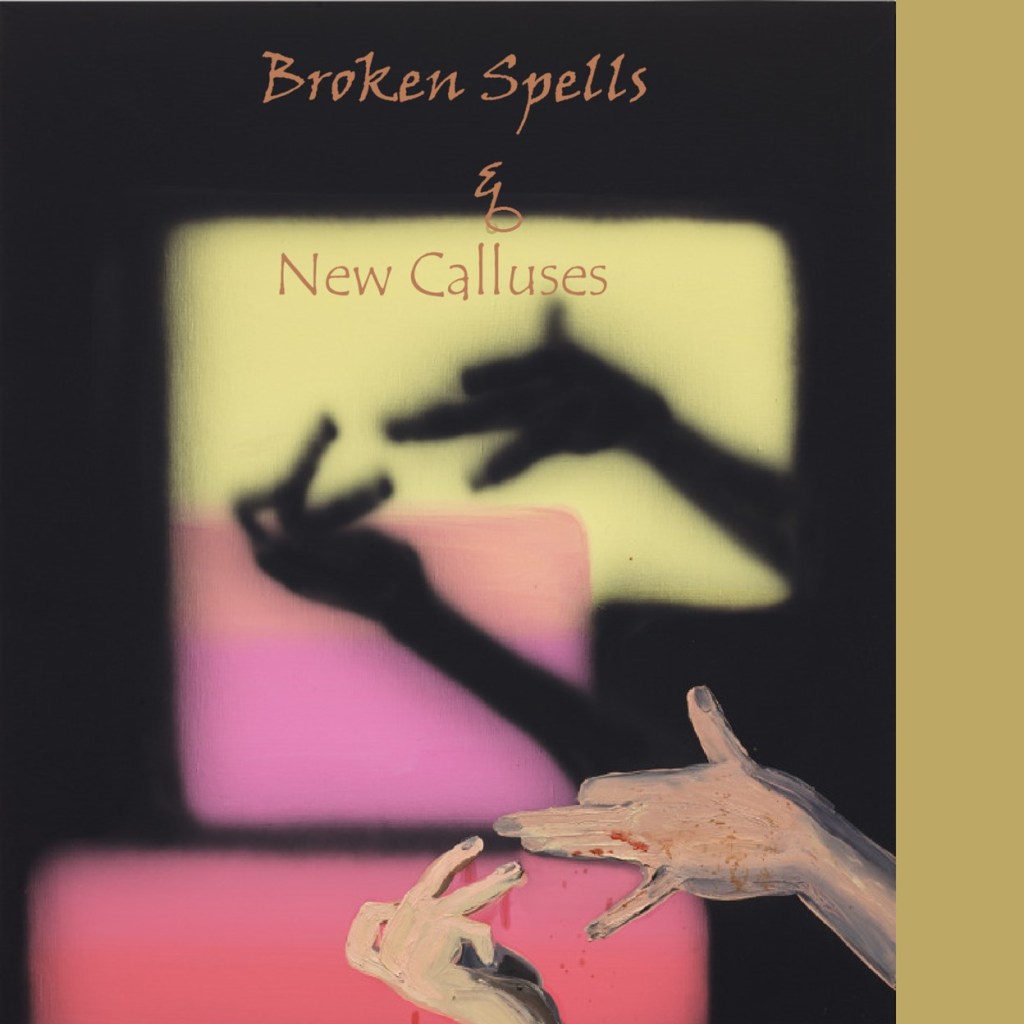
The tale following the two-fold path of enlightenment surrounding Kenneth Dawson Lee’s journey in Broken-Ness Spells & New Calluses a film noir expositional piece by Jasmin Jay Ivankovic defies traditional narrative structures, operating as an introspective odyssey through memory, identity, and existential reckoning. With a cadence that blends the frenetic intensity of stream-of-consciousness with the precision of theoretical reasoning, the novel advances a deeply personal yet structurally intricate engagement with themes of self-knowledge, mental illness, and institutional critique.

At its core, Broken-Ness Spells functions as a meditation on the intersections of memory and meaning. Lee’s narrator wrestles with the burden of recollection, attempting to discern whether past experiences serve as guiding beacons or as oppressive hauntings. The text’s recursive style mirrors this struggle, layering self-reflective commentary upon recollected experience, such that the novel itself embodies the difficulty of achieving definitive self-understanding. Lee’s prose, characterized by elliptical phrasing and syntactical inversions, further underscores this epistemological instability.

Moreover, the work interrogates institutional authority, particularly through its treatment of psychiatric hospitalization and surveillance. The protagonist’s engagement with mental health professionals oscillates between reluctant compliance and outright defiance, reflecting broader anxieties surrounding diagnostic frameworks and the medicalization of the psyche. Lee’s invocation of mathematical reasoning—most notably in his references to game theory and probability—infuses these institutional encounters with a calculated tension: how does one play a system that has already determined its winning conditions?

The novel’s engagement with enlightenment, both in its philosophical and personal dimensions, underscores its larger existential ambitions. The protagonist’s claim to a “two-fold path of enlightenment” signals an attempt to reconcile abstract, intellectual pursuits with immediate, lived experience. In this way, Lee situates his work within a lineage of philosophical fiction that includes Dostoevsky, Beckett, and Pynchon—authors similarly concerned with the limits of knowledge and the absurdities of human existence.

Yet, unlike his predecessors, Lee embeds his narrative within the rhythms of contemporary institutional life, rendering his philosophical inquiries not as lofty, detached ruminations, but as urgent and lived experiences. The novel’s hospital setting, replete with enigmatic figures such as Tonia Nosa-Deth and Deek Nesbitt, transforms into a microcosm of modernity’s alienating forces. The clinical and the existential collide in ways that feel both idiosyncratic and universally resonant.

Perhaps most compellingly, Broken-Ness Spells resists the impulse to resolve its own uncertainties. By leaving many of its narrative threads dangling and its philosophical inquiries open-ended, Lee creates a text that does not seek to impose meaning, but rather compels its reader to grapple with meaning’s inherent instability. It is this refusal to conform to conventional closure that ultimately positions Broken-Ness Spells as a vital and uncompromising work of contemporary literature.

The Incuriousness of Those Who Have Never Even Imagined It [Scene 2]

2. The “Honest Modern” : An Interpretive Dance

“I don’t abide by rules imposed by the society writ large,” he muttered, “I listen carefully to the orders instructively placed on my desk. So, if you’d please – get back from the door, take your bus back to your Journal News cabana expo outlet and ask someone else to consider some illegally nonsensical conformational hearing after sticking their neck out for you. No, nice try, maybe next time!” I get that’s how James made Tom Littlewood leave on a covertly-covered-up-wallpaper-low-note. “The post-modern advancement of what the God engine had scripted in the amphitheater of the doom,” I suppose a second burden of power to the mess made by the leakers of classified notes on the grounds that the game theory was at stake. “NOT THE GAME THEORY.”

That dream was intricate.

That was not what I thought was his exit through my “forever” back to camp with a bit of luck from mapmakers, mathematicians & necromancers (don’t ask). I have been locked in on that front for two weeks and already it was a new cast of shadowy sirens. “I get you LEE!”

“Nash didn’t get me, either. I thought it was true back when we came up with the Min/Max Theory, but that day wasn’t mine to face, either.” Okay, is this a filler for the same reasons we have good dramatic outbursts? Like the thing you see on a Harvard campus during spring formal, you know, walk past Mayflower and take the second left to exit Townsend and suddenly it’s the syndrome of necromancer writ honest modern. I saw their moves and stances to that extent that someone can hear the déjà vu in your voice and be genuinely confused for a prisoner of a supposedly fun post mistress of the 50’s.

“I know life wasn’t the same for you today, time wasting your mind away, wondering when it’s going to be the right time start our study for those harder exams.” Chloe Beth Littlewood said that in the ninth grade & someone spit. It was close, but here’s why she said that that way: “you don’t care about exams unless you’re in that circle, and no we were not even on the same playing field.”

“Who’s Chloe?” asked Tonia.

“Nobody, maybe that meant I was becoming more & more hemmed into it by my imagination,” the drowsiness set into a Lithium overload of the kind that this new drug was offsetting, “I’m on a new medication today.” So forgiven was the incurious who had never even imagined it. I was on some new management cycle of my lacking brain bandwidth made costly, effectively nulla & devoid of it – making statements that sounded like my personality was all but uprooted, but it wasn’t my fault, nor was it Dee’s, not even going bother accusing Tonia, and who dare even look in the eyes of Deek Nesbitt? I know, I know, Dee and Deek. It’s not so silly if you know the difference.

“WAKE UP DEEK!”

No he sleeping in the laundry room. Deek is batshit psycho but that’s the fun part. He told me a story after he entered with grade A PCX molecule that he was tormented by a vivid real like account of potentially being in the vampire dimension. Not the lost souls who inject you to save you from joining the cannibals of yore, not the serpents who graced him by a touch without death, the kind that never was meant to be anything other than tortured batshit. I mean the literal stuff of seeing the bats come through their screecher ways into a room where your being was stationed and asking if that meant you had seen too much, after all, not that unconsciously walking into every room could be helped by an inconsolable Deek. He was going psychomotor unresponsively possessed by the devil in the next simulation.

The Madman Has Somewhere to Be [Scene 1 in Expositional Film Noir] by Jasmin Ivankovic

  1. The Madman Has Somewhere to Be

I spoke too many words without telling a thing when I was young. Pretenses that kept a cool suppression muted in the face of any adversary. The valor we disguised with pride and laugher that held an oath that we meant “it is necessary and sufficient to seize the waking life,” another mantra I held for some time, “to give life into your destiny!”

“The system knew how to eat you alive. Sure you’re not in command of the wind, the way things blow, when it takes fate to claim, for years I was safe, I’d recommend careful – and, you may quote me.”

You would have never known much about their psychic pain, their scarlet recovery from suffering, and then you’d most likely have to actually start to think the premise of my involvement was not about my role in the prophacy of mankind to understand this reality–a life of giving accurate solutions. IT WAS beyond me that their brains feed on the dry wallpaper of thoughts unforgiving, and find their roots in mild to severe discomfort, only to make them act on their undefined convictions through fear of controlling the shock of what they cannot accept that’s at fault.

Dee Contour saw them bridge the gap of inequity from foolishness on day two. On day one, they sleep, so the motif is set. But they nevertheless fight for resilience on day seven. Yet we both don’t say it to anyone – the consideration of a greater & sharper set of threaded thorns against life’s side-channeling with deepening cresent enlightenment: ‘FIND YOUR VOICE’ was discovered on floor five of the hospital. The day of wanting escape is around nine. Then their last resort to escape from these walls gets muddied by new faces before they feel more helplessness and the cycle is to resume. I fought to let these people find causality in their voices in ways that they need things to be shown & could make sense to them, for it was what evades certainty in the mind, to care this way. Dee Contour Senior has the gray hair to back a claim than could cause you to remember rapressed or just deeply faded memories of your childhood, which feels entirely new to themselves when you care this way – but lost on most entries where I hung my neon of “forever” before or until they had seen the reality of that in the light of dawn. “Look at that what’s on the back cover of the assigned reading:

‘FIND YOUR VOICE’ in marine blue, highlighter yellow, and deep red. No one knew what I meant by that.” Don’t try to filter it deep down just to forget about the good, the bad, and the madmen sacred to the environment enough to give something back to those who had not expected anything to be there at all. They share a sacred space here.

Tonia Nosa-Deth was a rebellious fifteen-year-old girl from Britain, who claimed she had been in love with an older man, resulting in her family committing her to the hospital where KDL lies awake wishing he were elsewhere, and by sending her to Davenport, IA they removed two of the moles in the scheme to put her into prostitution for this man – right after Tonia first heard the words “FBI” spoken in broad daylight, she heard voices (around this time) guiding her to follow her “internal locus of control,” and she had since dreamed that the bureau had already put her in a Covert Operations “training camp;” so I could relate that my experiences with the system had felt like something was larger than human intelligence & taking control of us, beyond any comprehension we possess, KDL explained that three people had stated that, in places such as this before, that he knows of, that these places often doubled as secret schools for operations for all sorts of target practice for the US Justice Bureau—played by the actors’ plucking strings behind the scenes in the shadows. The music was starting again.

I entered the downtown emergency lot on androgenic hallucinogens, toxins that keep the keyhole transmitters locked into a wrong loop of reuptake, and there I confronted eyewitnesses of other crimes that happened months later. What DO they mean to run from? “Nothing to hide, nothing to run from, either.” Only I had to think for a while. It’s hard not to feel nerve-endings twist with every ounce of my nerve-racking being at stake in the vanity of strangers who have things to hide. “Go home after you talk to the big guy out front.”

What you cannot think of is mass surveillance, so that the security to not be waterboarded in the living room of a squatter’s hideout. What then becomes of us but our voice? Within this sad & helpless era, another epoch of misguidedly misjudged losers calling themselves artists. We’re all directors. “I feel so/so.” We were all stray cats lost to be found by the well-wisher’s – so the love was gone with someone else’s maniac-esque prismatic light formulated glass pane fragments of blue and yellow, colors unrigid in their indifference? As it was (then but not now) the root of my emergence. Because our faithful directionality has somewhere to be.

I assuage we can agree that love for those we cannot understand will often fend walls that stand in opposition, from time to time – to allow them to exist in this state of counter-to-effort effects, efforts (or lack thereof) have made these individuals themselves.

“You know, It’s never so simple.” This was running through my mind a ways before it drew a last-day-on-earth kind of sound, thinking of my friend’s goddaughter who had a fear of knives so she stayed out of the kitchen during dinner, and left diners alone to eat at home during birthdays, and was horrified by my stories of interacting with a pika patient for hours at a time, but the fear-exposure worked. Here’s the gist: Young people may not hold themselves to their word, but the hallmark of an adult is holding yours like your life depends on it. To be afraid of knives is one thing, because yeah, at any time something sharp can hurt you & make you bleed real, honest blood, but to see the terror in the world post tragic event, after event can leave you in real agony.


“Nothing happened, you know, between me and this older gent.”

“You know my motto is not the same as my mantra,” I continued, “My motto is: ‘the madman has always somewhere to be’, but my mantra changes each day.” Here’s the realist response to the Copenhagen interpretation, “We become what we already were after time had brought us to where we are now,” or “It’s harder than your heart because the truth is in the way,” or “I wish I remembered all those places I’ve been, with the people I was with, the way it was back then, because, then, I would know what on earth happened,” etc.

The same light of gray in winter with crosstalk on whispering inside voices of libraries, I witnessed a murder that day. Then surely you saw it, too. With which you saw the first snow of yesteryear in red, waiting for you to paint with. From before fractalized-time exposures, they said so too into your voice (and whatever the trend to compromise), a story born of a tragic situation.