Kenneth Dawson Lee’s Journey Through Memory and Identity

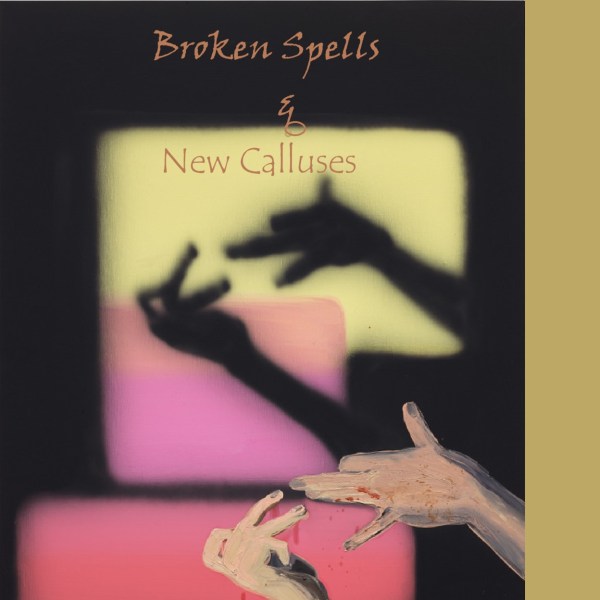
The tale following the two-fold path of enlightenment surrounding Kenneth Dawson Lee’s journey in Broken-Ness Spells & New Calluses a film noir expositional piece by Jasmin Jay Ivankovic defies traditional narrative structures, operating as an introspective odyssey through memory, identity, and existential reckoning. With a cadence that blends the frenetic intensity of stream-of-consciousness with the precision of theoretical reasoning, the novel advances a deeply personal yet structurally intricate engagement with themes of self-knowledge, mental illness, and institutional critique.

At its core, Broken-Ness Spells functions as a meditation on the intersections of memory and meaning. Lee’s narrator wrestles with the burden of recollection, attempting to discern whether past experiences serve as guiding beacons or as oppressive hauntings. The text’s recursive style mirrors this struggle, layering self-reflective commentary upon recollected experience, such that the novel itself embodies the difficulty of achieving definitive self-understanding. Lee’s prose, characterized by elliptical phrasing and syntactical inversions, further underscores this epistemological instability.

Moreover, the work interrogates institutional authority, particularly through its treatment of psychiatric hospitalization and surveillance. The protagonist’s engagement with mental health professionals oscillates between reluctant compliance and outright defiance, reflecting broader anxieties surrounding diagnostic frameworks and the medicalization of the psyche. Lee’s invocation of mathematical reasoning—most notably in his references to game theory and probability—infuses these institutional encounters with a calculated tension: how does one play a system that has already determined its winning conditions?

The novel’s engagement with enlightenment, both in its philosophical and personal dimensions, underscores its larger existential ambitions. The protagonist’s claim to a “two-fold path of enlightenment” signals an attempt to reconcile abstract, intellectual pursuits with immediate, lived experience. In this way, Lee situates his work within a lineage of philosophical fiction that includes Dostoevsky, Beckett, and Pynchon—authors similarly concerned with the limits of knowledge and the absurdities of human existence.

Yet, unlike his predecessors, Lee embeds his narrative within the rhythms of contemporary institutional life, rendering his philosophical inquiries not as lofty, detached ruminations, but as urgent and lived experiences. The novel’s hospital setting, replete with enigmatic figures such as Tonia Nosa-Deth and Deek Nesbitt, transforms into a microcosm of modernity’s alienating forces. The clinical and the existential collide in ways that feel both idiosyncratic and universally resonant.

Perhaps most compellingly, Broken-Ness Spells resists the impulse to resolve its own uncertainties. By leaving many of its narrative threads dangling and its philosophical inquiries open-ended, Lee creates a text that does not seek to impose meaning, but rather compels its reader to grapple with meaning’s inherent instability. It is this refusal to conform to conventional closure that ultimately positions Broken-Ness Spells as a vital and uncompromising work of contemporary literature.
“Creating Your Own Philosophy” : Chapter Zero of My First Novella

“My sources link the ultimate goal’s path to reason. He only realizes when logic & empathy are his only credible angle of nuance; the leader’s first discretion is the gravity of the better part of his valor and the next is a step-sequence in which he keeps a wavelength of himself, keeping the pretense of civility, as he had now kept it all for keeps.” I know him as my grandfather James Modest, a good but repetitive judge, who used to know the scientific method – once again saves humanities faith in human nature; an epoch of better legislation cascades forward, a brave new beginning to a new era emerges, and its all due his last ruling as a retiring Justice.

I was 18 years of age and despite how I trusted my gut, I held on to a pit in my belly, seeing it for the first time: a sculptured-bust of my grandfather’s candid grin made in 1981 with “heritage festivals” sculpted on both of the ends in honor of Modest. The moment framed the long-form picture of my baccalaureates program of study with no hard-and-fast rules. In an age when it remains the “status quo” to sell the information that our elders and betters “sold to someone else” and that much should’ve “taught us by now,” I remind myself of this day, fondly & forever, as it remains as the harmony made for the aim of “chasing, achieving, and displaying my ideal”. My consistent motive is to search for answers without realization-failures for making my first and only philosophy to be founded on the Higher, “capital T” Truth as it now remains my only (remaining) option.

Modest passionately defends the school’s cognitive beginnings, but more importantly all we can see is more downstream changes, falling as they domino off of one another, putting more dualities to rest by interpretation from his Abstract-eon Bridge, quintessentially by way of his clever reinterpretation of the Min/Max Theorem, discovered long before he was even born. But here we remain phase-locked to, in fact, believe more frequencies remain unknown to our conditions of prophecy – to which we owe the 21st century its freedom, only of a chosen generation that was destined to decide before and against the odds if and how to continue the great fight to secure either our truth or our survival. The truth is, we are mortals alive to live life for forever in a world of Either/ORs.

“When changed, nothing can change the truth back to where it began,” were her first words to me in class on that first day; yet, it reminded me of the rebel in my bones meeting me half way – how I imagined the idea of Love leaving claw-marks on me for the first time, was now no longer just a fear, it even showed its teeth.

By Jasmin Ivankovic

Favorite Poems

Found in: Sincerely, by F.S. Yousaf

Former Stories / Better Conclusions

You were the girl

I wanted to impress through my writing,

For I knew that normal words would not work

With you.

You were special,

And craved the kind of love

That crazy, spontaneous writers had,

The ones that only reside

In history books.

Of course,

I pray our story does not end like theirs.

I only desire happiness for us.

Vision

Once we harmonized,

Your goals and dreams

Also became mine.

And I so dearly

Wanted to see you

Achieve them all.

Letters

I always told myself

That I could not possibly

Fall in love with you more.

But here you are,

Proving me wrong once more.